Classic New Orleans Style Beignets
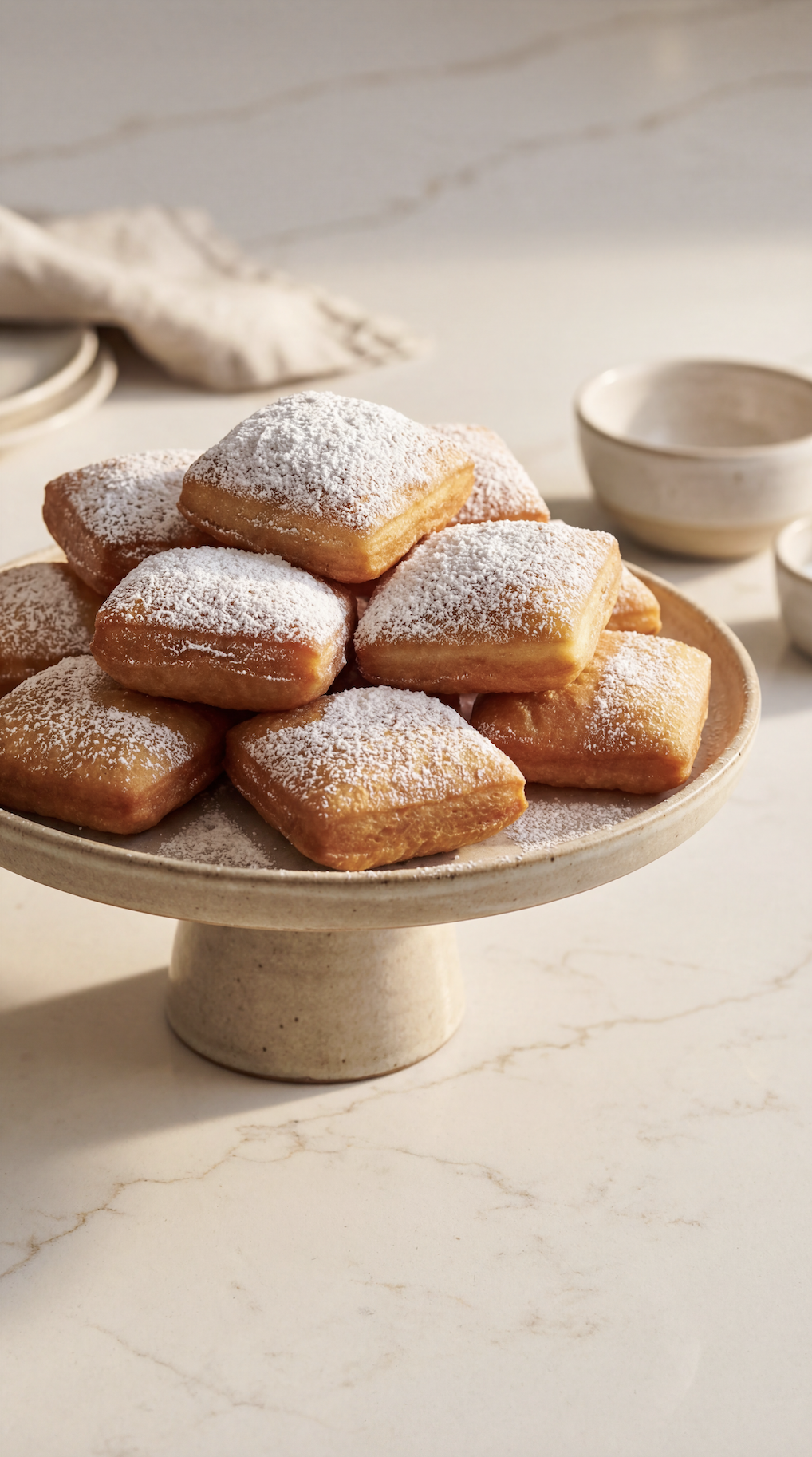
There are certain recipes that instantly feel like a celebration, and beignets are absolutely one of them. The moment you see those golden, pillow-soft squares piled high and absolutely buried in powdered sugar, you know you’re in for something special. They’re messy in the best way, a little indulgent, and meant to be enjoyed slowly with coffee, laughter, and zero concern for the powdered sugar inevitably ending up everywhere.
If you’ve ever been to New Orleans, you probably already know the magic. Beignets are warm, airy, slightly crisp on the outside, tender on the inside, and just sweet enough to feel like a treat without tipping into overly dessert-y territory. They’re traditionally served hot, fresh from the fryer, and dusted generously with powdered sugar - no glaze, no filling, no fuss. Just simple, comforting perfection.
This recipe is my go-to when Mardi Gras rolls around, but honestly, it’s just as perfect for weekend brunch, a cozy snow day, or anytime you want to bring a little joy into your kitchen. Don’t be intimidated by the frying part - I promise, it’s easier than it sounds, and the results are so worth it.
Let’s get into it.
Why You’ll Love These Beignets
First things first: these beignets are soft and fluffy, not dense or greasy. They puff beautifully as they fry, creating those classic airy pockets inside. The dough is easy to work with, forgiving, and doesn’t require any fancy equipment. If you can roll out cookie dough, you can make these.
They’re also incredibly nostalgic. Something about warm fried dough dusted with powdered sugar just feels comforting and familiar, like a hug in food form. And while they’re iconic for Mardi Gras, they’re not tied to a single season - you’ll find yourself wanting to make them again and again.
Ingredients
For the Dough:
warm water (about 110°F)
For Frying & Finishing:
Neutral oil for frying (tallow or avocado oil works best)
How to Make Beignets
1. Activate the Yeast
In a large bowl, combine the warm water, yeast, and a pinch of the sugar. Give it a quick stir and let it sit for about 5–10 minutes, until the mixture looks foamy and alive. This step is important - if it doesn’t foam, your yeast may be expired, and it’s best to start fresh.
2. Mix the Dough
To the yeast mixture, add the remaining sugar, egg, milk, melted butter, and salt. Stir until everything is well combined. Start adding the flour one cup at a time, mixing as you go, until a soft dough forms. You’re looking for a dough that’s slightly sticky but manageable.
3. Knead and Rise
Turn the dough out onto a lightly floured surface and knead for about 5–7 minutes, until smooth and elastic. Place the dough in a lightly greased bowl, cover, and let it rise in a warm spot for about 1½ to 2 hours, or until doubled in size.
4. Roll and Cut
Once risen, gently punch down the dough. Roll it out on a floured surface to about ¼-inch thickness. Using a sharp knife or pizza cutter, cut the dough into roughly 2½-inch squares. Don’t worry about being perfect - rustic is part of the charm.
5. Fry to Golden Perfection
Heat about 2 inches of oil in a heavy pot to 350°F. Fry the beignets in batches, turning once, until puffed and golden brown on both sides (about 1 minute per side). Use a slotted spoon to transfer them to a paper towel–lined plate.
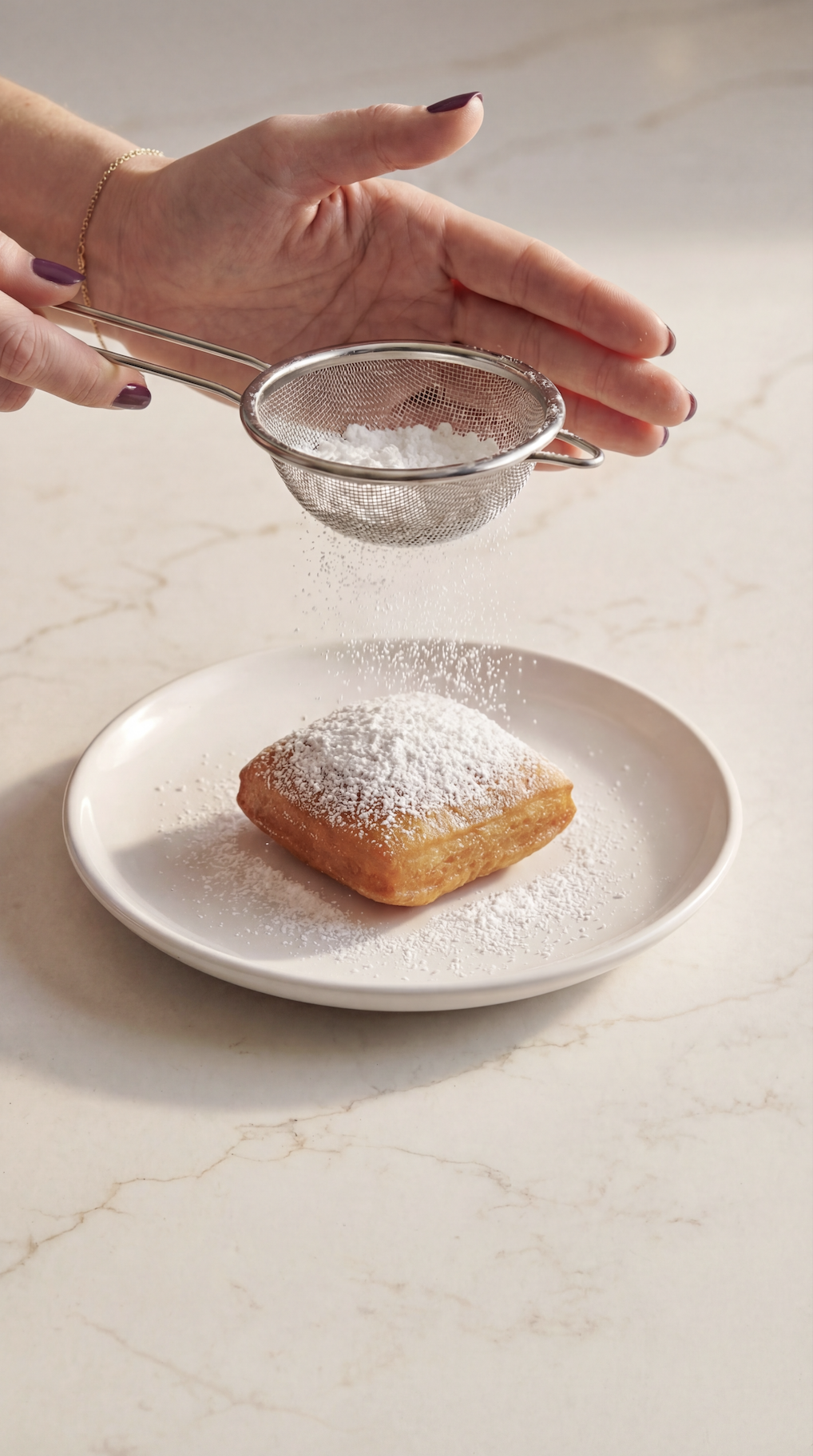
6. Dust and Serve
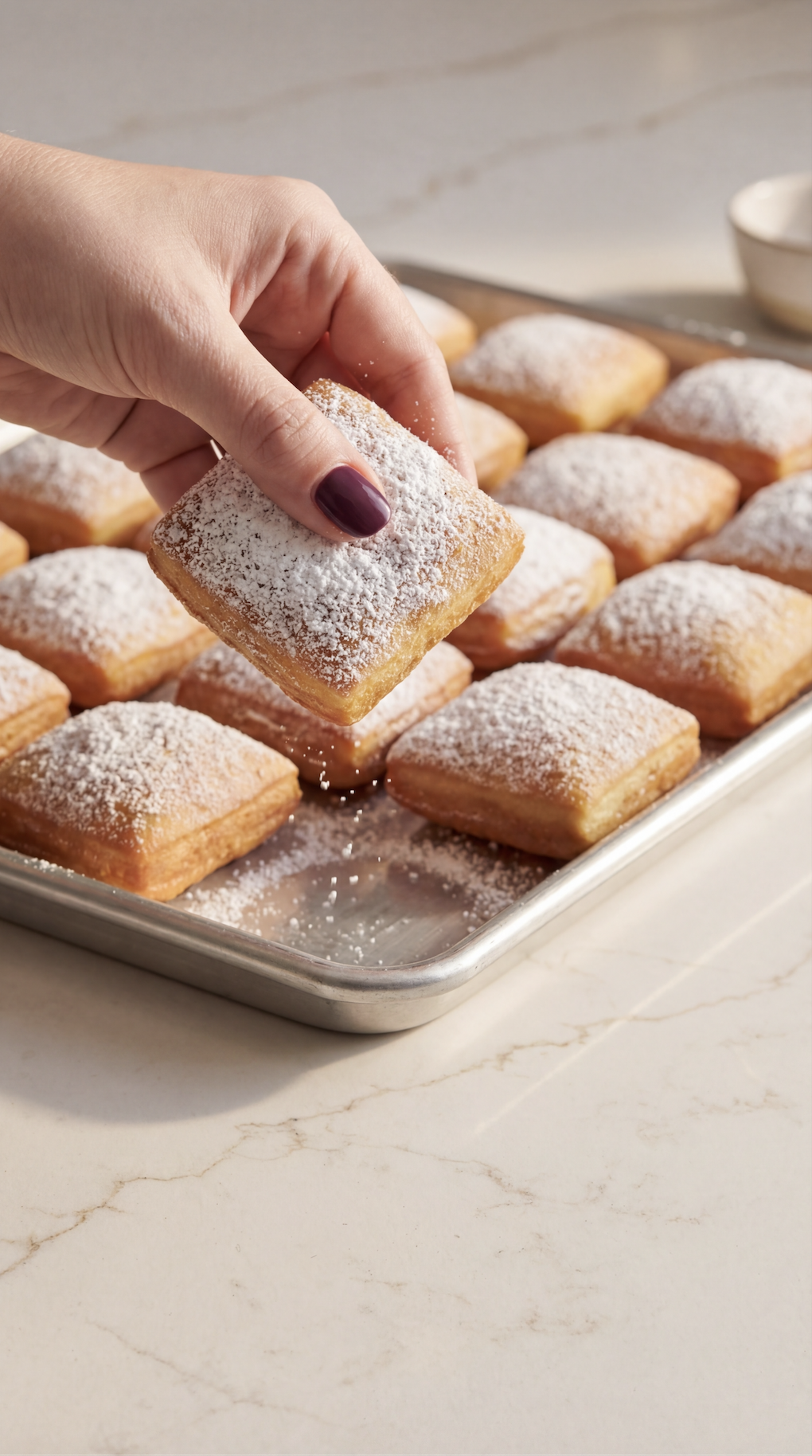
While still warm, pile the beignets onto a serving platter and dust generously with powdered sugar. And when I say generously, I mean it - this is not the time to hold back.
Tips for the Best Beignets
Serve them fresh. Beignets are best enjoyed warm, right after frying. That’s when they’re at their fluffiest.
Keep the oil temperature steady. Too hot and they’ll brown before cooking through; too cool and they’ll absorb oil.
Don’t overcrowd the pot. Fry in small batches to keep the oil temperature consistent.
Embrace the mess. Powdered sugar everywhere is part of the experience.
What to Serve with Beignets
Traditionally, beignets are served with strong coffee or café au lait, and I highly recommend sticking with that classic pairing. The bitterness of the coffee balances the sweetness perfectly. They also pair beautifully with hot chocolate, chicory coffee, or even a simple latte.
If you’re serving these as part of a larger brunch spread, they go wonderfully alongside savory dishes like eggs, bacon, or a breakfast casserole - that sweet-savory contrast is hard to beat.
Perfect for Mardi Gras (and Beyond)
Beignets are deeply tied to Mardi Gras celebrations, but you don’t need beads or a parade to enjoy them. Making them at home turns an ordinary morning into something special. There’s something about working with dough, waiting for it to rise, and then watching it puff in hot oil that feels grounding and joyful.
They’re also a great recipe to make with family or friends. Rolling, cutting, frying, and dusting — it’s a hands-on process that’s meant to be shared. And when you finally sit down to eat them, covered in powdered sugar and smiling, it all feels worth it.
Looking for more dessert recipes? Try my popular recipes below:

Classic New Orleans Style Beignets
This recipe is my go-to when Mardi Gras rolls around, but honestly, it’s just as perfect for weekend brunch, a cozy snow day, or anytime you want to bring a little joy into your kitchen. Don’t be intimidated by the frying part - I promise, it’s easier than it sounds, and the results are so worth it.
Ingredients
- ¾ cup warm water (about 110°F)
- 2¼ teaspoons active dry yeast (1 packet)
- ¼ cup granulated sugar
- 1 large egg
- ½ cup whole milk
- 3 tablespoons unsalted butter, melted
- ½ teaspoon salt
- 3½ to 4 cups all-purpose flour
- Neutral oil for frying (tallow or avocado oil works best)
- Powdered sugar, for generous dusting
Instructions
Notes
- Serve them fresh. Beignets are best enjoyed warm, right after frying. That’s when they’re at their fluffiest.
- Keep the oil temperature steady. Too hot and they’ll brown before cooking through; too cool and they’ll absorb oil.
- Don’t overcrowd the pot. Fry in small batches to keep the oil temperature consistent.
- Embrace the mess. Powdered sugar everywhere is part of the experience.
Nutrition Facts
Carbs
22 gCholesterol
16 mgFiber
1 gFat
3 gNet carbs
22 gSat. Fat
2 gSodium
73 mgSugar
4 gProtein
3 gCalories
134Nutritional information is only an estimate. The accuracy of the nutritional information for any recipe on this site is not guaranteed.